
Manaka’s Journey: Finding Hope in the Unknown
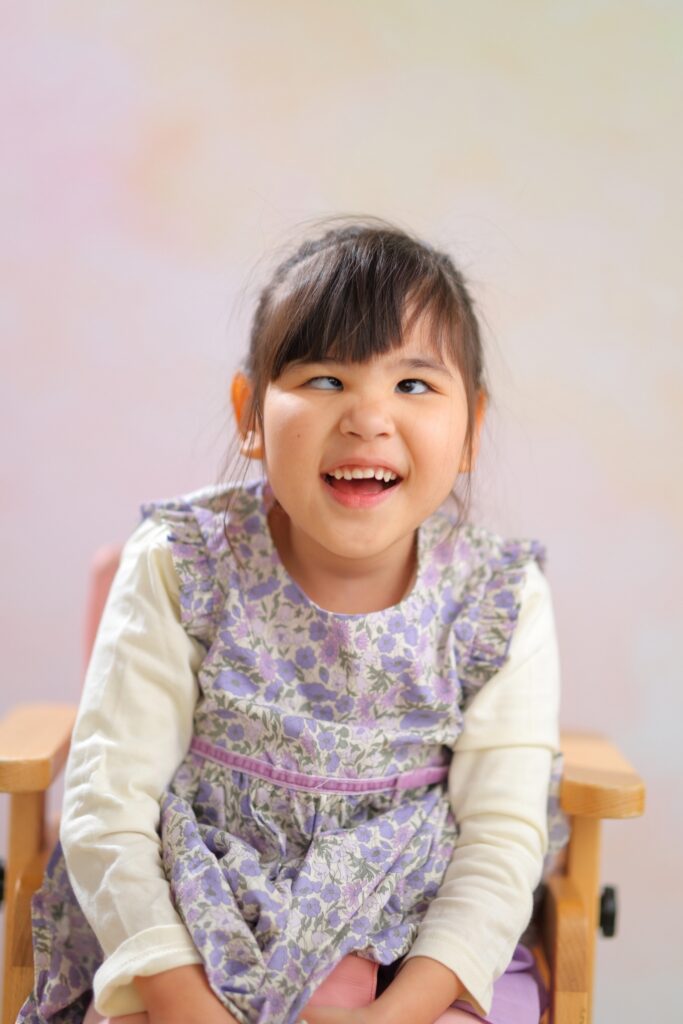
My name is Megumi, and my daughter Manaka was born in April 2018 by cesarean section because she was breech. There were no complications during pregnancy, and no abnormalities were noted when she was born. However, Manaka hardly cried and had weak overall muscle tone. From the beginning, I felt that something was wrong.
I talked to the doctors during her check-ups and vaccinations, but I was told to watch and wait.
After Manaka was five months old, her weight stopped increasing. Her overall muscle strength remained weak, and she was delayed in her development. She was referred to a pediatric hospital for further evaluation.
Then Manaka stopped eating. Just before she was scheduled to undergo detailed examinations, she began vomiting. After receiving IV treatment, she temporarily could not breathe and had to be urgently admitted to the hospital.
Although her breathing improved, she became unable to take food by mouth. A nasogastric tube was inserted, and she was managed with tube feeding. From that point on, she repeatedly experienced unexplained vomiting, and we spent one to two weeks each month in the hospital.
While we were searching for the cause, Manaka underwent chromosomal testing, metabolic testing, and genetic testing. In March 2020, doctors thought that her vomiting might be related to neurogenic bladder. After she began catheterization, her condition improved, and eventually we were able to stop the gastric tube.
However, her development and growth remained delayed, and we still did not know why.
I researched as much as I could and asked the doctors as many questions as possible, but I could not get the answers I was looking for. The uncertainty, the repeated hospitalizations, Manaka’s poor health and worrying about what would happen to her next took a great physical and mental toll on me.
Then, in December 2020, we finally received an answer. Based on the results of genetic testing that had been done previously, Manaka was diagnosed with Vanishing White Matter disease (VWM), a leukodystrophy.
I was shocked. I was told that the disease can have an early onset and a poor prognosis, that there are few reported cases and therefore not much is known about its course, and that there is no fundamental cure because the disease is progressive.
I was shaken by the explanation, but I desperately asked the doctors to share as much information as they could. Afterward, I was overwhelmed with fear that Manaka might disappear. At the same time, the vague anxiety of not knowing what was causing her problems was finally gone.
Learning to Live with the Unknown
The shock of my daughter being diagnosed with VWM was immense. I felt anxiety and fear about everything. Because VWM is progressive, I still worry that something might happen to Manaka, and that fear has not changed.
Before Manaka was born, I had planned to give birth to my daughter and return to work after maternity leave. But because her development and growth were delayed, I could not find a caregiver for her. My life was completely overturned by caring for a child who is chronically ill.
It also had a significant impact on my older son, and we spent every day struggling.
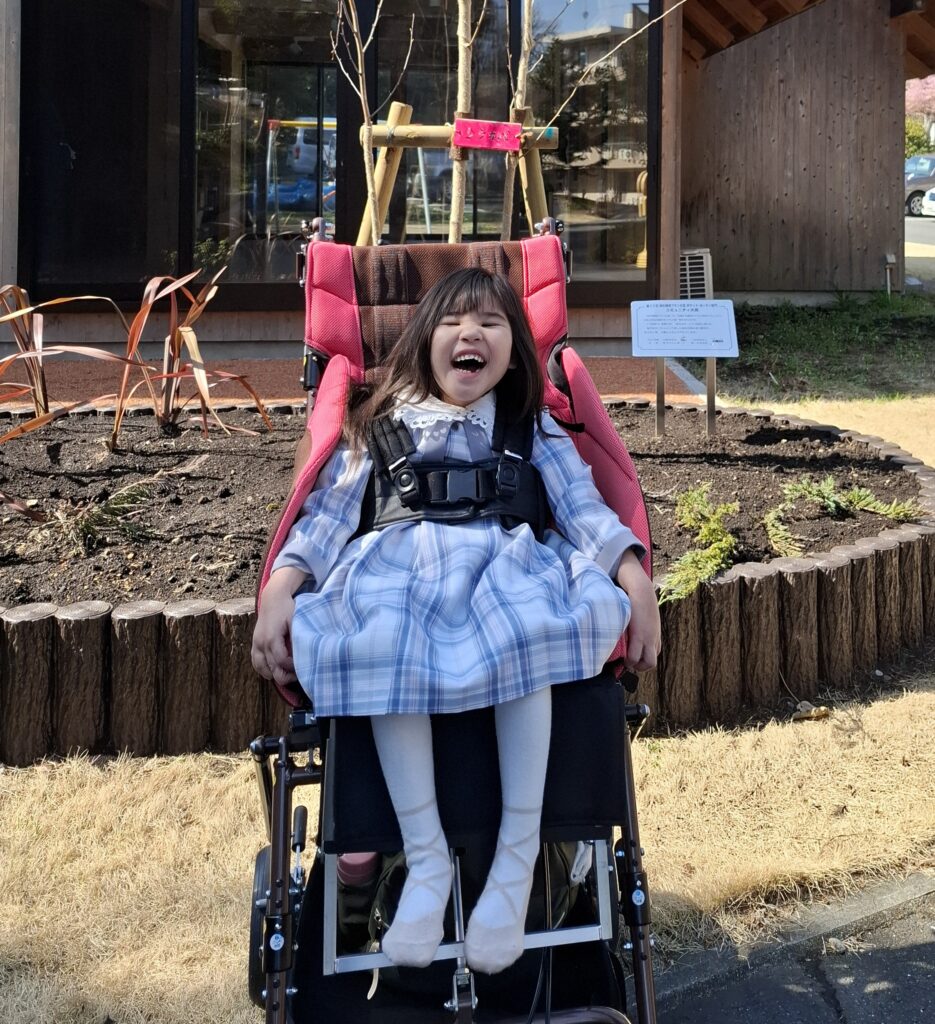
Eventually, we found a daycare that welcomed Manaka. Once she began attending, she started to enjoy her time there and gained many capabilities. She safely graduated from kindergarten and, last year, started elementary school. She now also attends after-school services. Every day feels like fitting the pieces of a puzzle together. When I see my daughter smiling during these moments, I feel that ordinary, uneventful times without special circumstances are happiness.
We have received support from so many people. The coordinator, the on-call doctor, her attending physician, nurses, caregivers, physical therapists, social workers, the staff at her after-school day service, and other mothers have all helped us. All these people have helped protect my daughter’s smile.
Since August 2020, a nearby clinic that provides home visits for children requiring medical care has also supported our family. We have received help through short-term stays, home-visit nursing and home-visit care.
In 2021, Manaka had cataract surgery. Since 2022, she has also been diagnosed with epilepsy, which can currently be managed with oral medication.
I know that Manaka will face different obstacles in the future because VWM is a progressive disease. But each time something happens, I want to make decisions that I can accept and feel are right for our family.
Holding On to Hope
There are very few cases of VWM, and sometimes I feel crushed by fear and anxiety about what will happen next. We were told that the survival rates up to the age three were about 50%, but Manaka is now eight years old.
Because there are so few cases, I also hold on to the belief that miracles can happen. I keep living each day. The language barrier makes it difficult for me to participate in seminars and other programs the ULF provides, but it is reassuring to know that a large organization has been established in the United States and that I am receiving support through the work the United Leukodystrophy Foundation is doing.
VWM is a rare disease, and as a mother, I want to learn as much information as possible. Clinical trials are currently being conducted, and I am hoping for good results.
I do not know what the future will bring for Manaka. But today, Manaka is going to elementary school. She is receiving support from many people, and she is continuing to grow and experience new things. So, for now, I want to continue living each day with her, putting the pieces together one at a time, and holding on to hope for her future.
Your generosity makes a difference in the lives of families like Manaka’s by supporting research, providing support,
and helping create a brighter future for those living with leukodystrophy.